How to Choose the Right Denim Weight for Your Brand
Denim weight is a starting point for fabric selection. Fiber composition, fabric construction, stretch, and the finished hand feel all shape how a garment looks and wears.
What Does Denim Weight Mean?
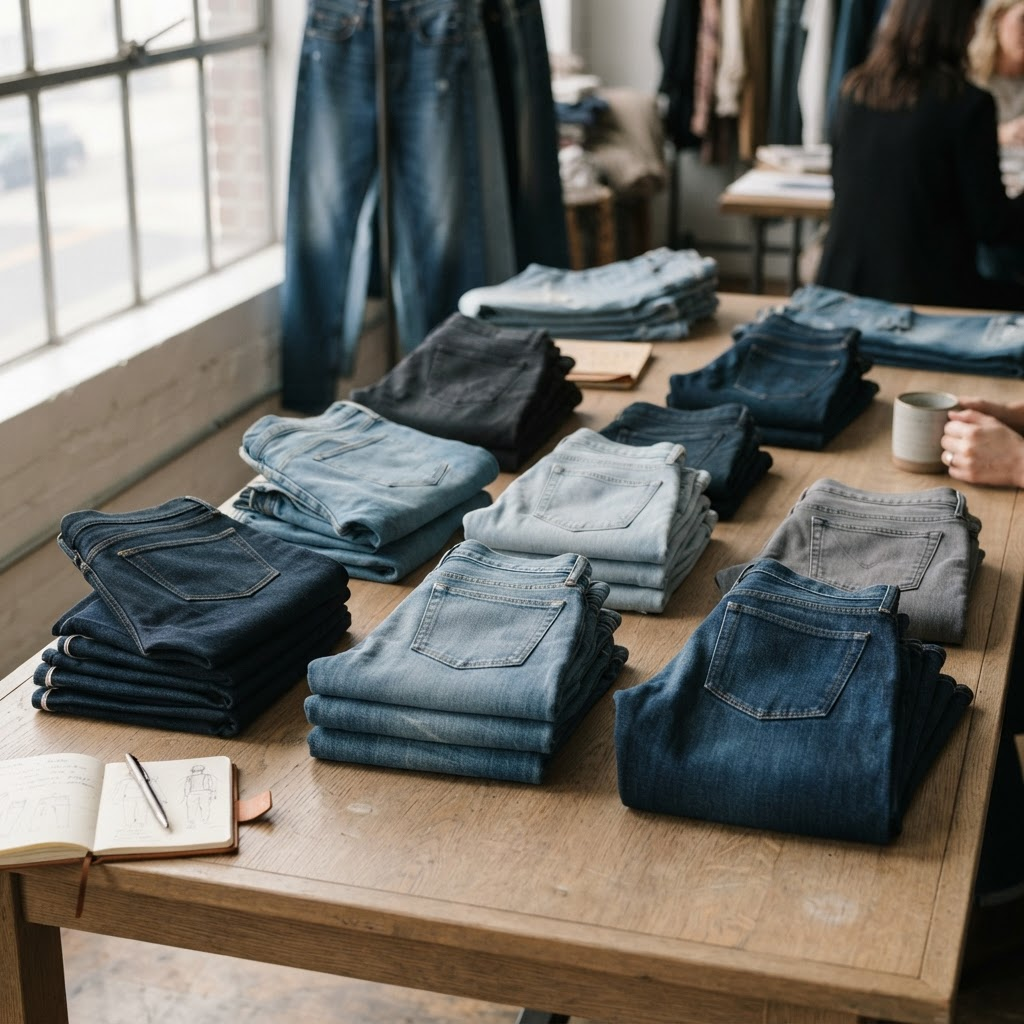
Denim weight in oz generally refers to ounces per square yard of fabric. Lower numbers indicate lighter fabric per unit area, while higher numbers indicate heavier fabric. Thickness, structure, and softness also depend on fibers, yarns, weave, and finishing. Use weight to shortlist fabrics, then assess the washed garment sample.
8–10 oz: Lightweight Options for Spring and Summer
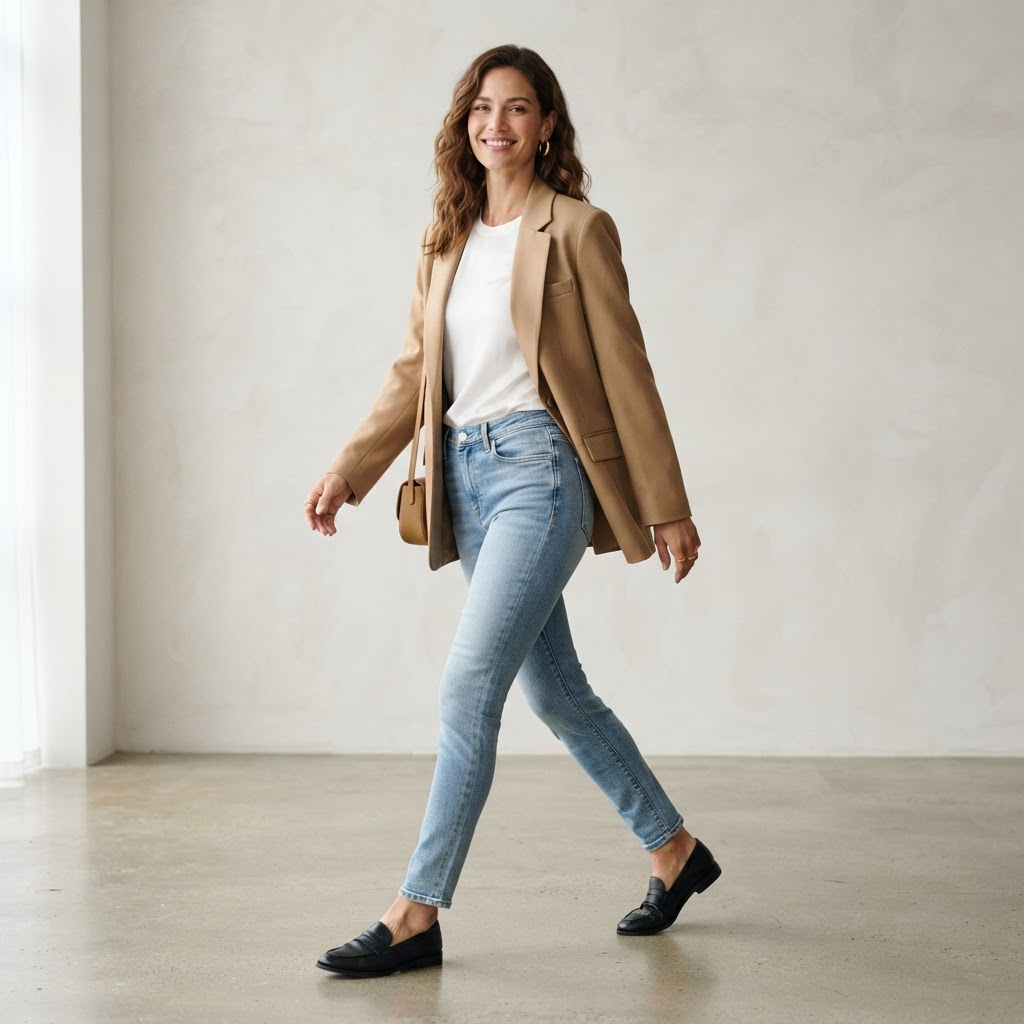
The 8–10 oz range provides a starting point for lightweight denim development. Fine constructions, stretch, or softening finishes can support spring and summer slim-leg jeans, fitted straight styles, and designs with fluid drape. Evaluate the result against the fabric construction and intended fit.
For slim styles, check stretch, recovery, knee bagging, and dimensions after washing. When combining lightweight fabric with extensive distressing, bleaching, or repeated abrasion, assess seam strength and the stability of treated areas during sampling.
Styling example: the fitted lines and proportions of light blue slim-leg jeans.
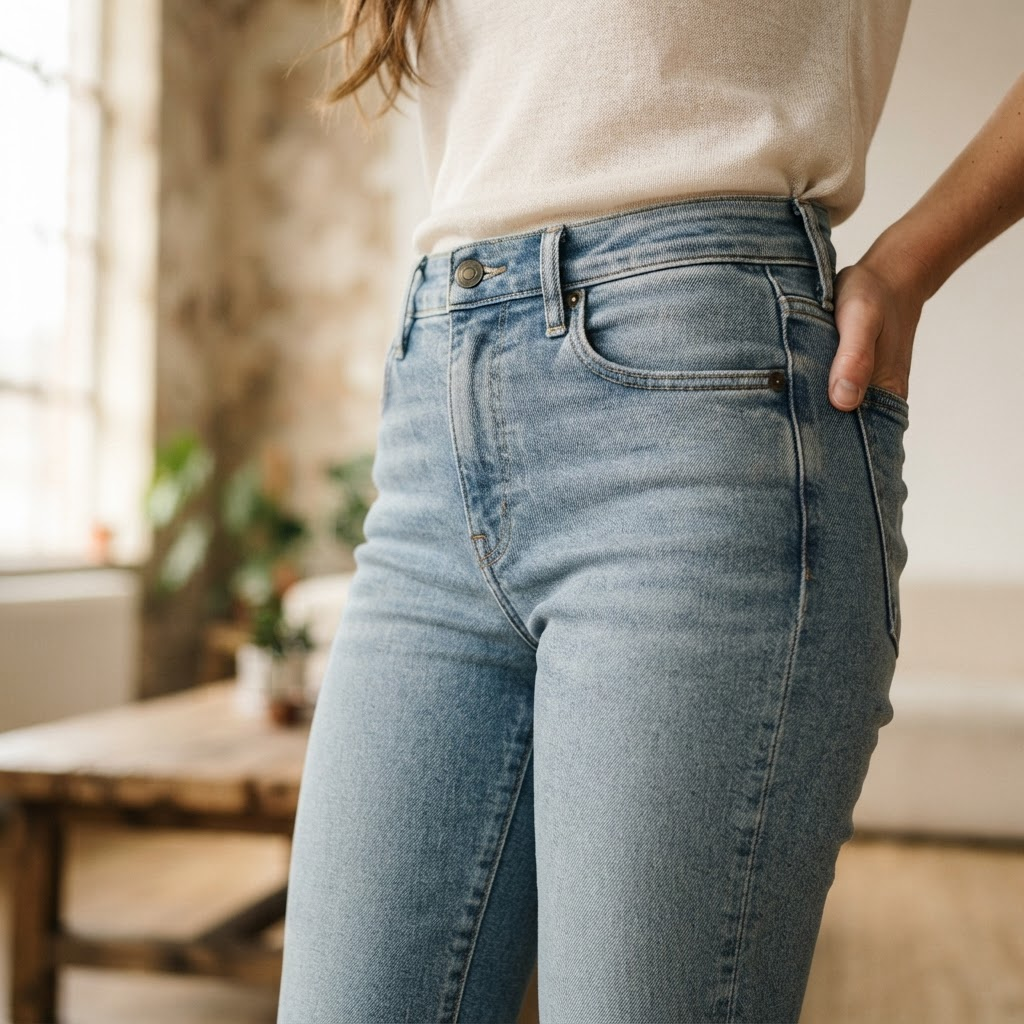
Detail example: front pockets, waist-to-hip fit, and fabric creases.
11–13 oz: Balancing Structure and Movement
The 11–13 oz range offers a starting point for midweight straight-leg jeans, wide straight styles, fitted jeans, and denim jackets. Assess support through the waist and hips, movement at the knee, and how the hem falls to match the intended silhouette.
Sourcing Note
Even at the same 12 oz weight, rigid cotton denim, stretch blends, and different yarn constructions can deliver different stretch and recovery. Make the final selection after fitting the washed garment sample.
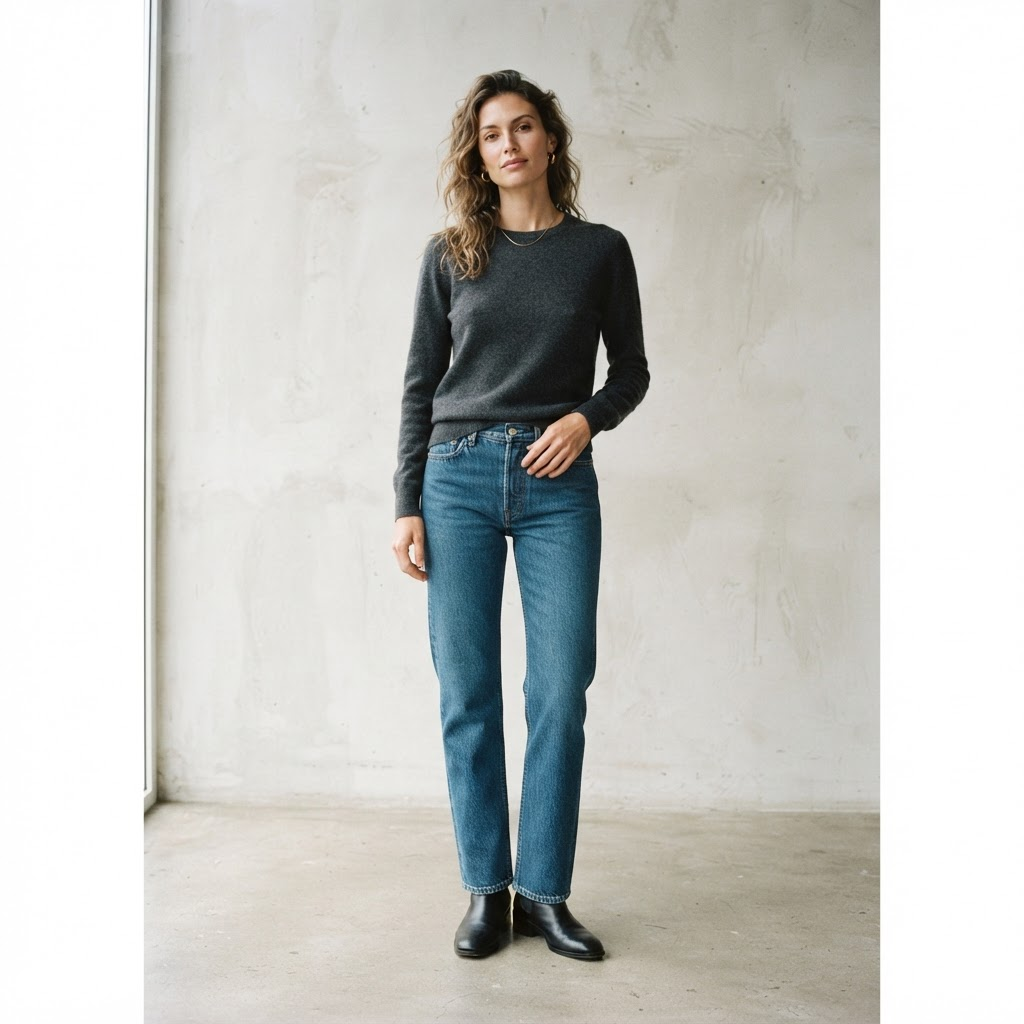
Styling example: the overall silhouette of blue straight-leg jeans.
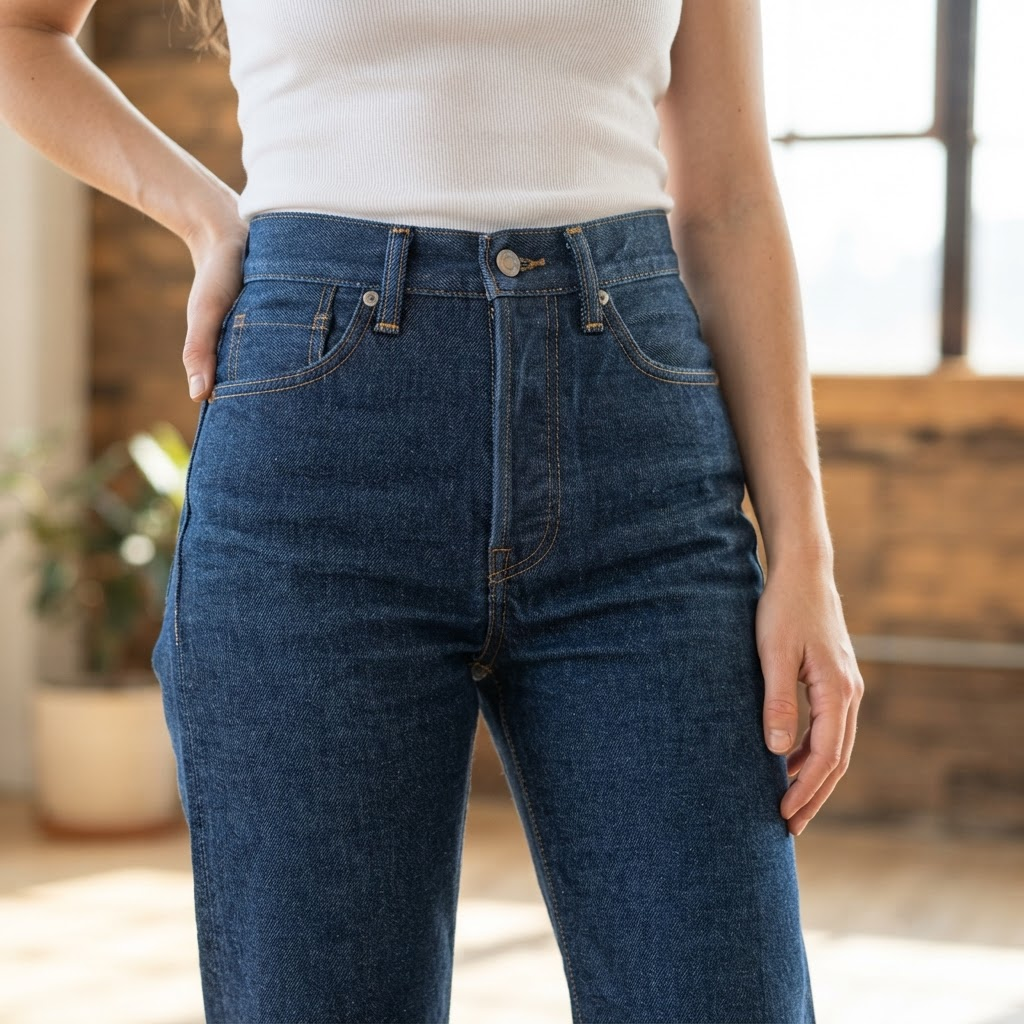
Detail example: waistband, front rise, and contrast stitching.
14 oz and Above: Defined Structure and Raw Denim Character
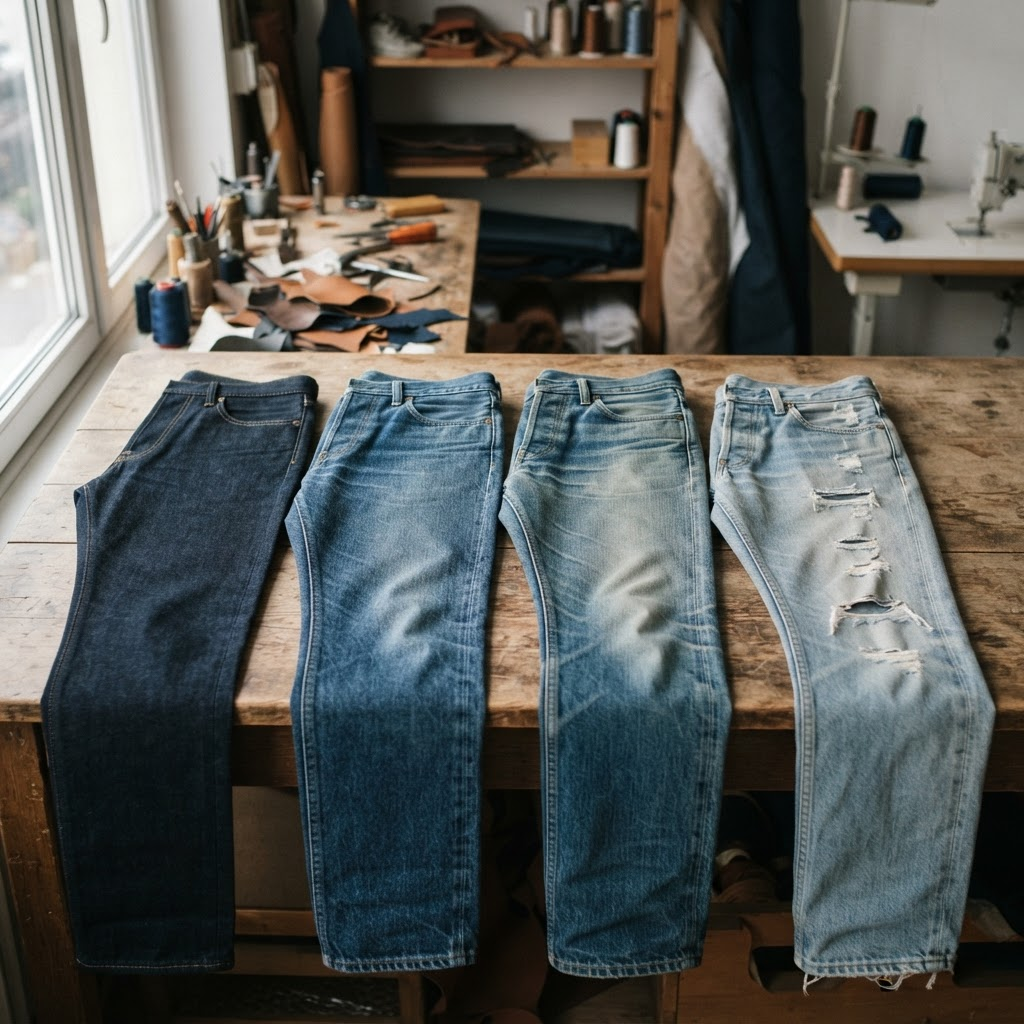
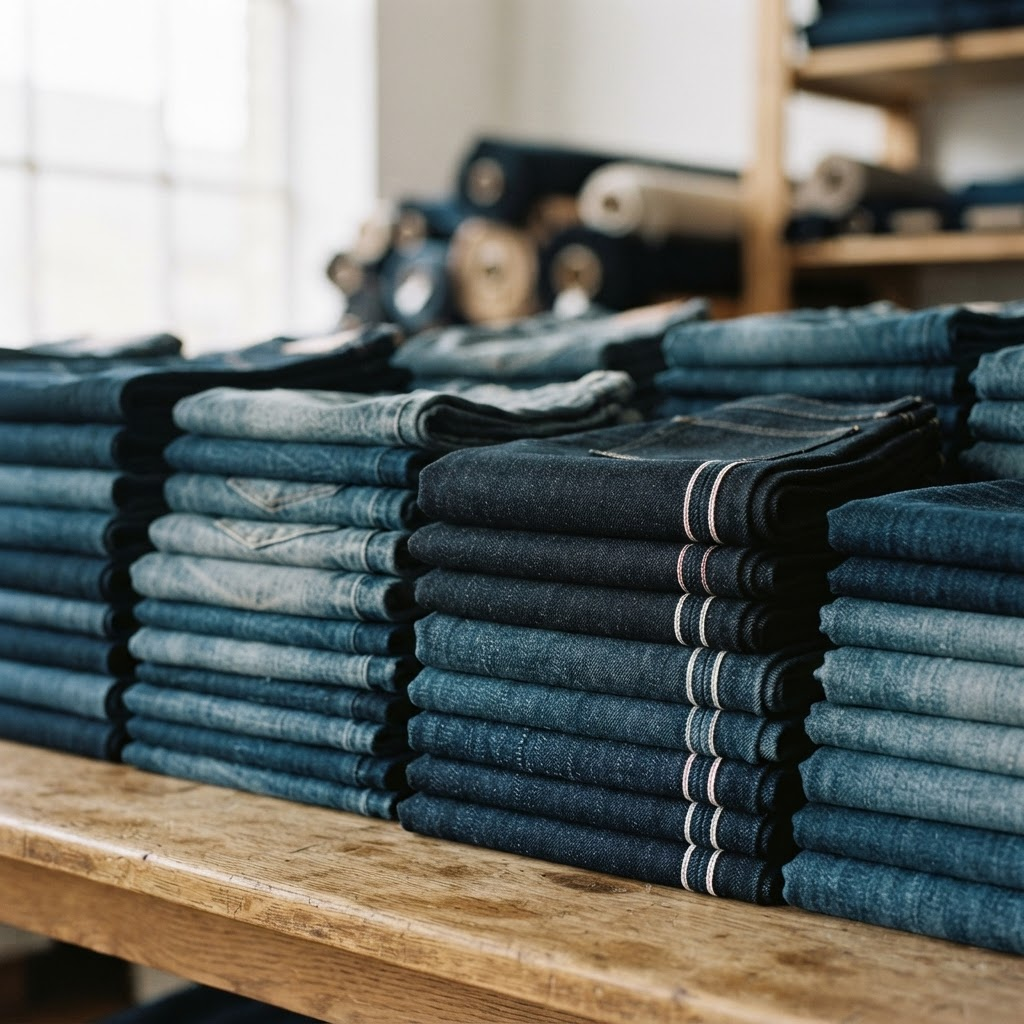
Weights of 14 oz and above provide a starting point for heavyweight denim collections, including raw denim and vintage workwear. Evaluate crease formation at the waistband, thighs, and knees, together with initial hand feel and ease of movement.
Sourcing Note
Confirm cutting, sewing, bartacking, and hemming requirements for heavier fabrics. Product information should explain the initial feel, care instructions, and color-transfer precautions.
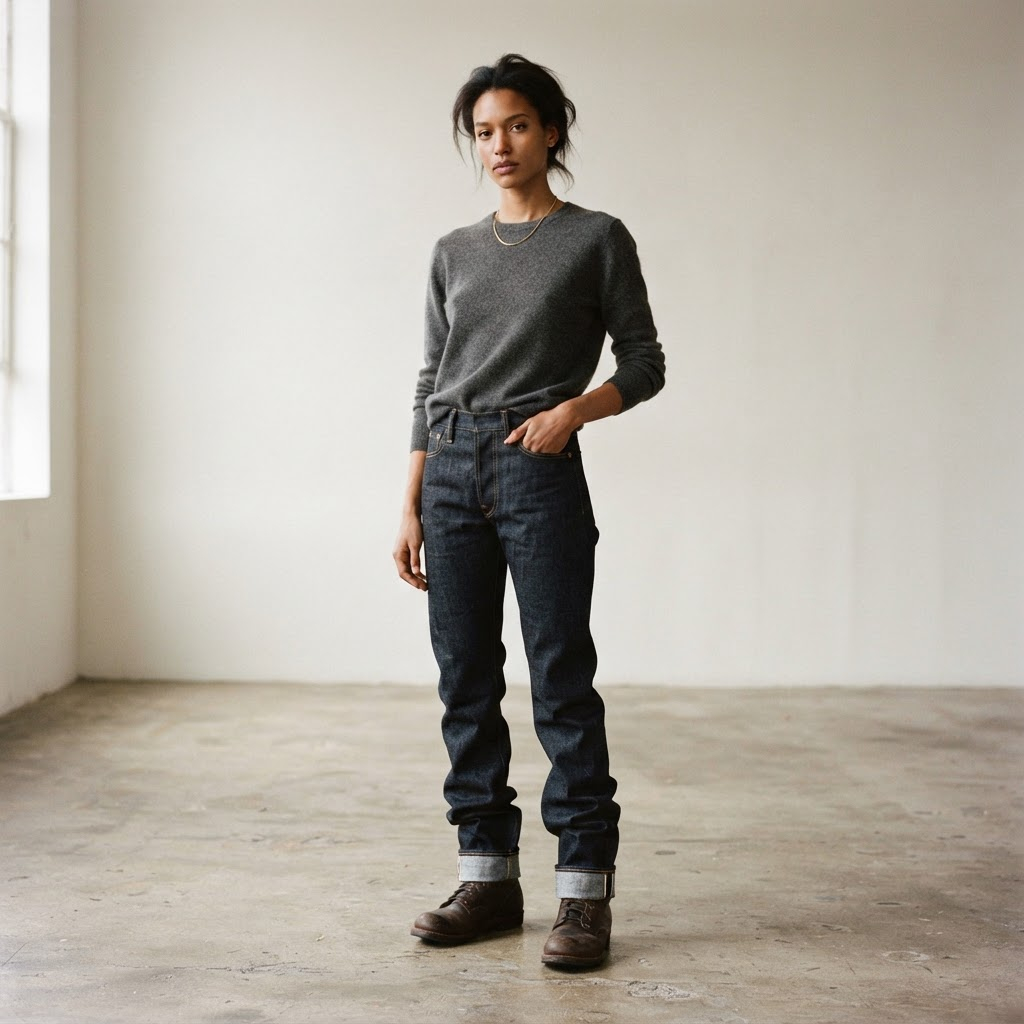
Styling example: dark denim with straight legs, turned-up hems, and defined creases.
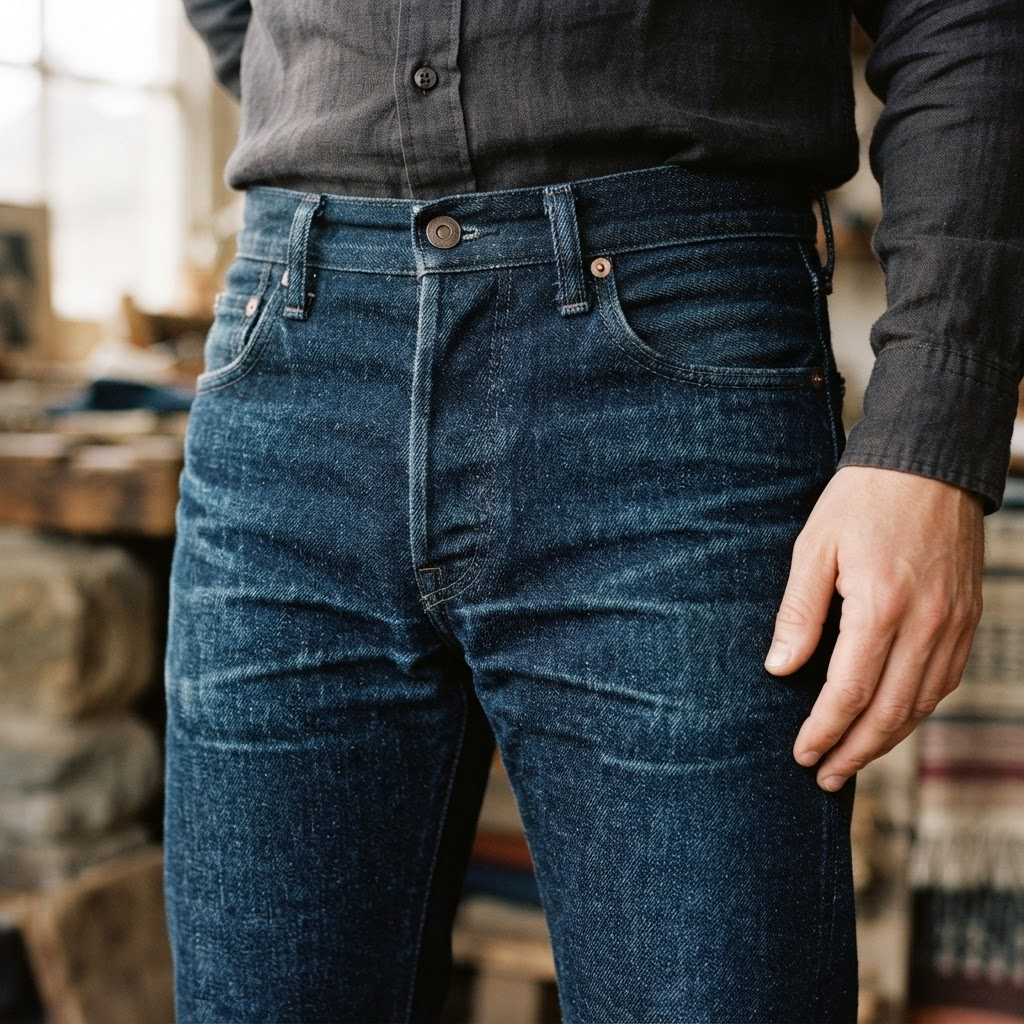
Detail example: waistband, front pockets, and pronounced fabric creases.
Three Factors to Check Alongside Weight
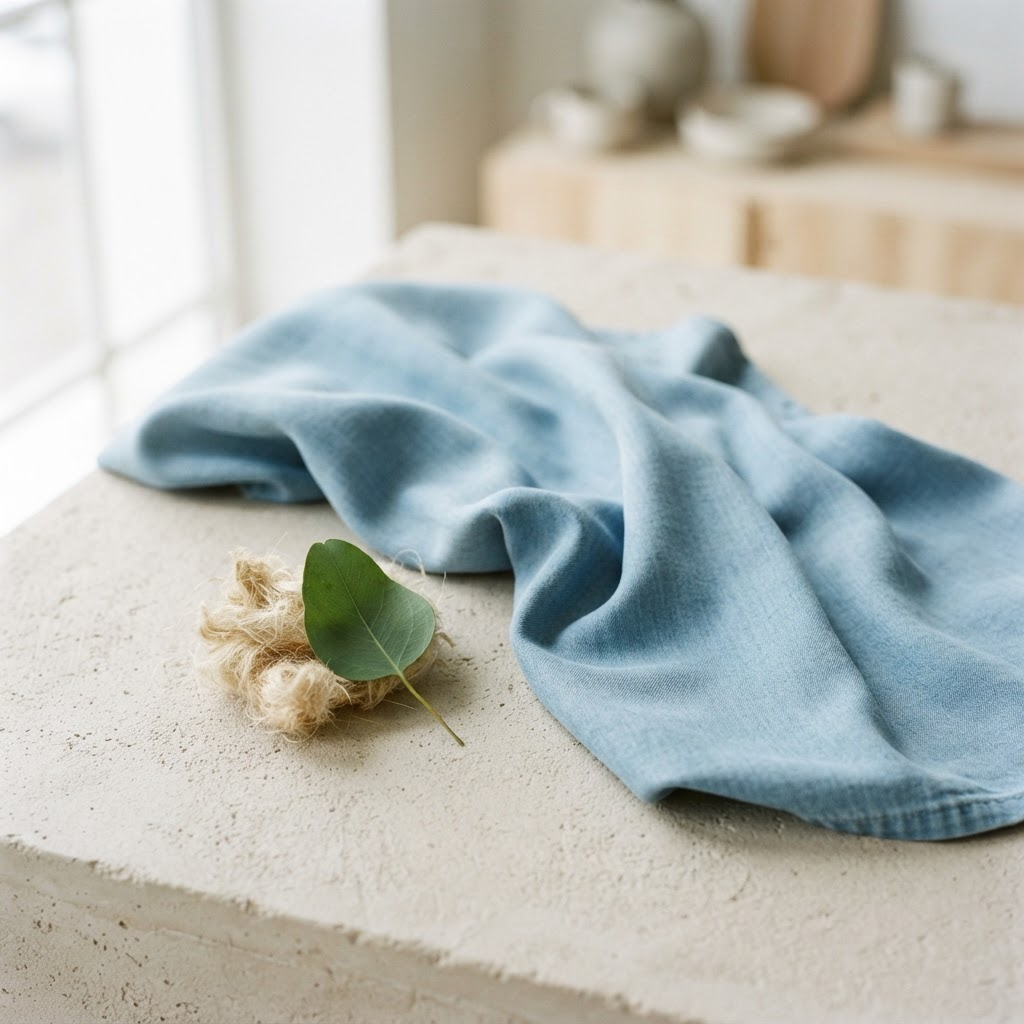
Fiber Composition: Assess stretch, recovery, softness, and drape for cotton, stretch blends, and lyocell blends.
Fabric and Yarn Construction: Fabric density, yarn count, twist, and yarn structure influence appearance, body, and hand feel.
Performance After Washing: Check shrinkage, twisting, fading, hand feel, and dimensions on the finished garment sample.
Sourcing Guidance
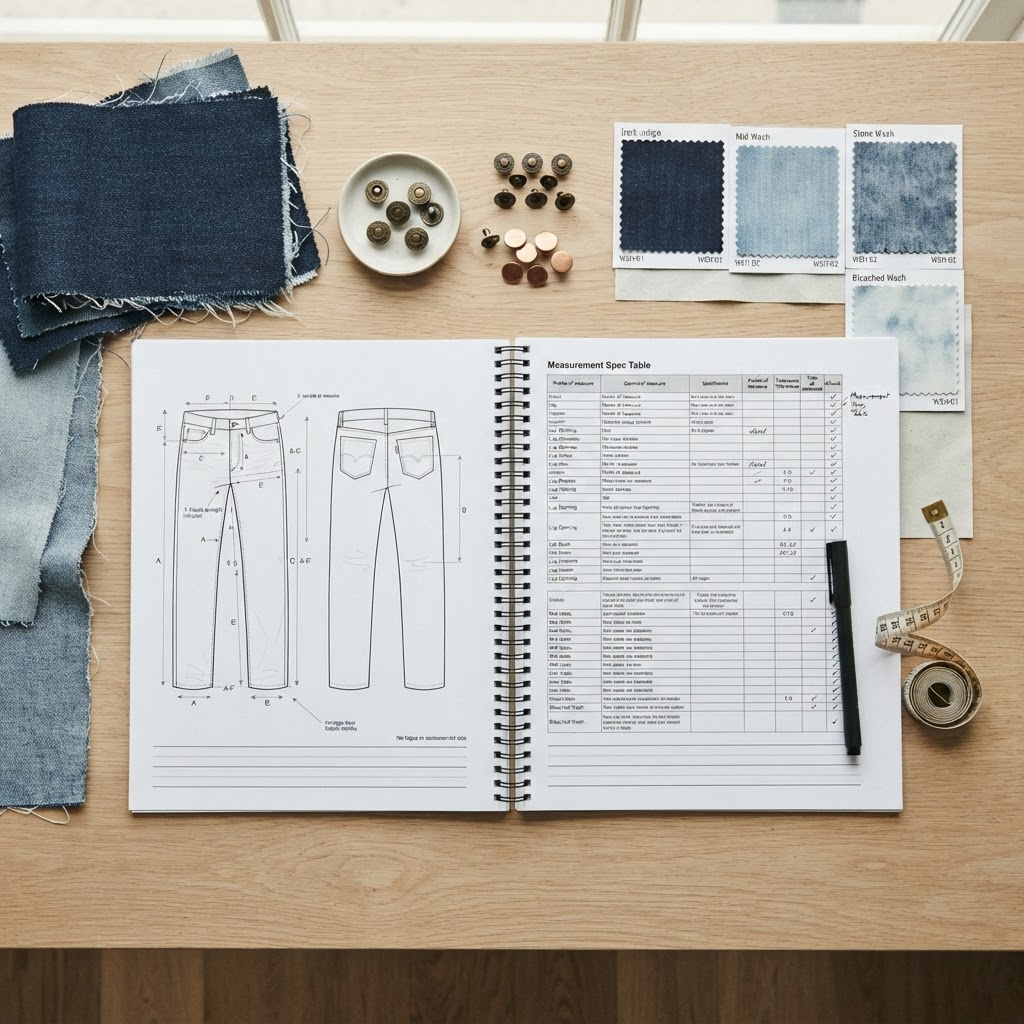
Share your target retail price, selling season, customer profile, fit, and reference sample to communicate the desired hand feel. Confirm base fabric specifications, washed samples, dimensional shrinkage, and testing requirements during development.
Share your reference sample or product brief. We can help narrow the fabric selection by weight, composition, fit, and wash effect.