
From Vintage to Modern: A Guide to Denim Washes & Finishes

jchen • October 21, 2026

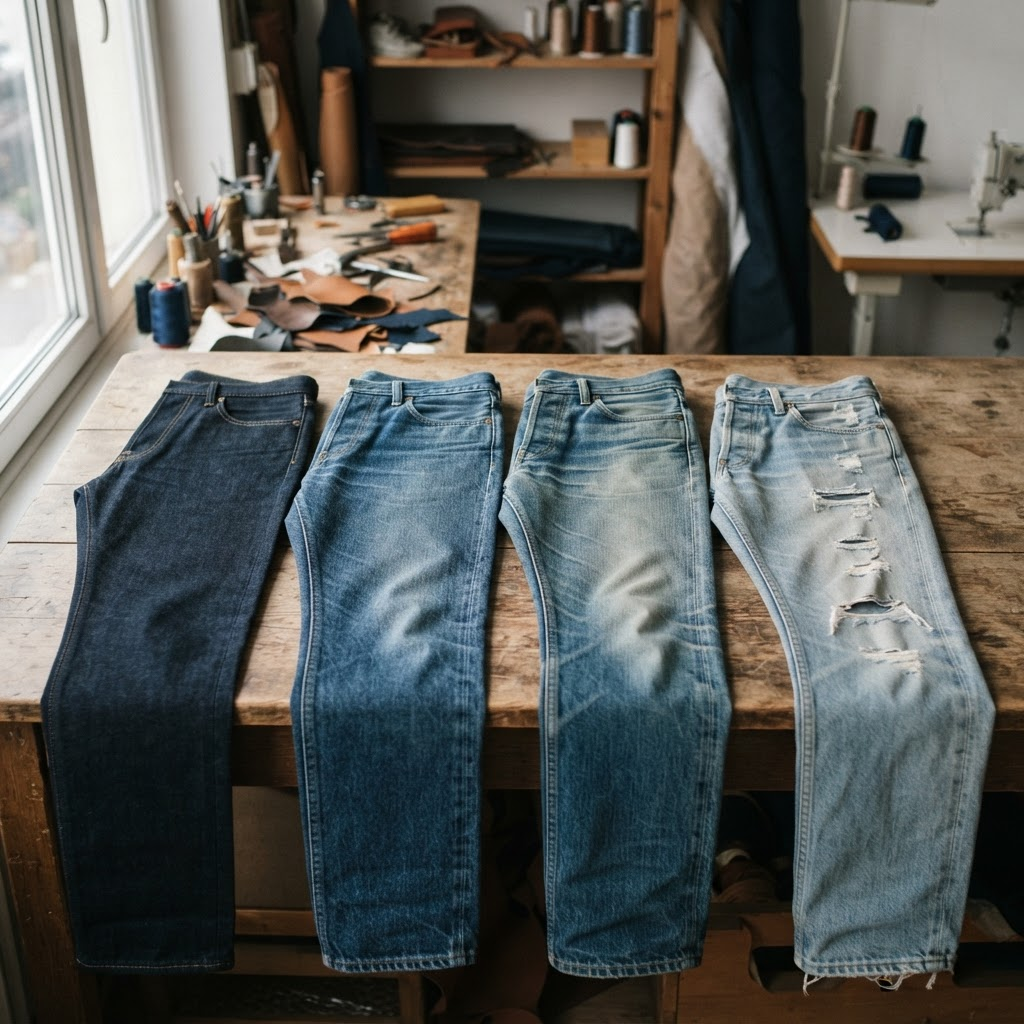
Fading, whiskering, localized abrasion, and distressing should be developed alongside the fabric, fit, and production conditions to achieve consistent results from sampling through bulk manufacturing.

Establish the Base Shade First

Use physical shade references, approved samples under standard lighting, and measurable color tolerances to define the target finish. Stone and enzyme washes adjust overall shade and hand feel, while bleaching develops lighter effects. Check fabric strength and changes in hue alongside the visual result.

Whiskering: Recreating Wear Creases

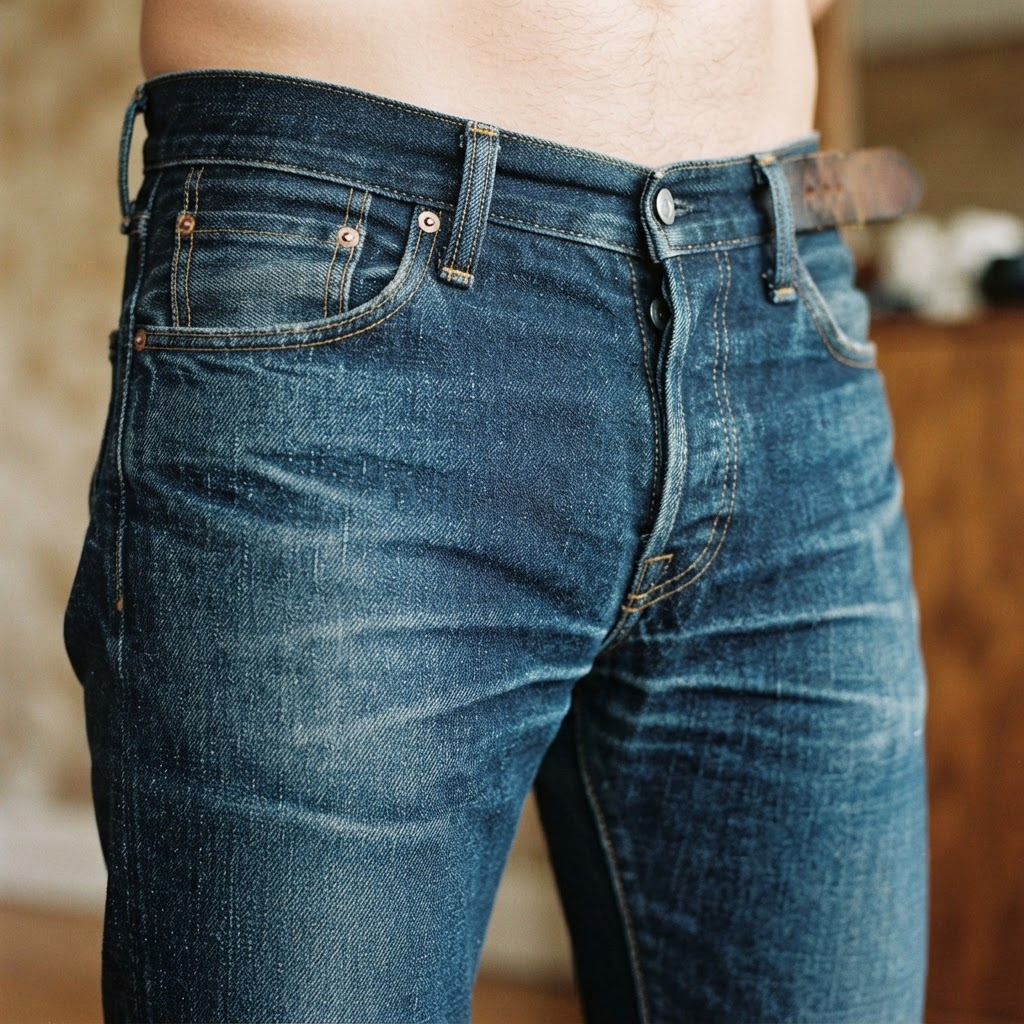
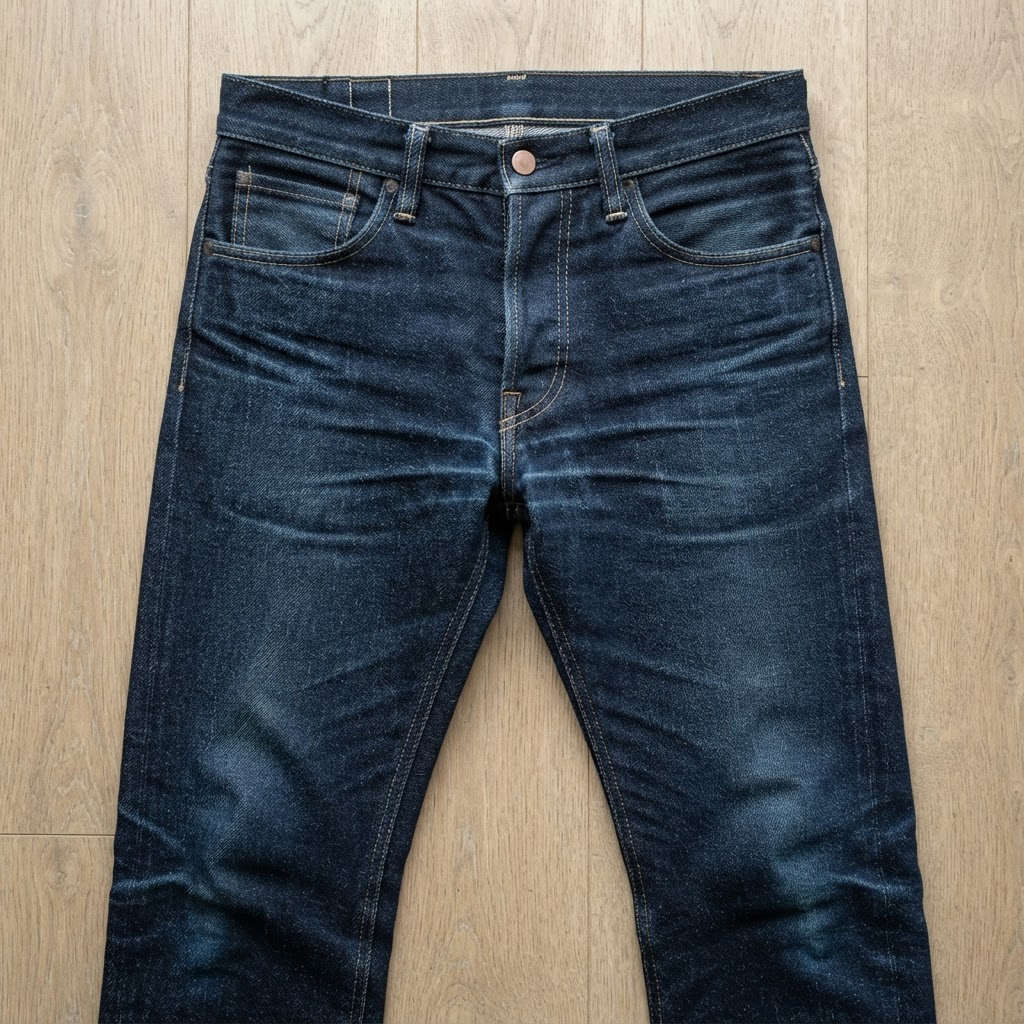
Whiskering creates faded lines extending from the front rise and hips to suggest creases formed through wear. Match the angle, length, and contrast to the fit and target customer. Use approved samples to define placement, tonal transitions, and acceptable left-right balance.

Illustrative close-up of faded whisker lines across the front rise and hips of worn jeans.

Styling detail: hip whiskering and tonal contrast.

Illustrative flat-lay image of dark blue jeans showing whisker lines across the front rise and thighs.

Flat-lay detail: whisker placement, fading, and left-right balance.

Localized Fading: Adding Depth to the Leg

Localized fading on the front thighs uses vertical tonal transitions to create visual depth. During development, check edge blending, left-right variation, abrasion intensity, and fabric strength after treatment.

Laser Finishing: Translating Designs into Repeatable Settings

Laser finishing can create whiskers, crackle patterns, dots, diamonds, and gradients. Digital artwork defines placement, energy, and scanning paths for repeat processing. The final appearance also depends on the dye, fabric weight, moisture conditions, and subsequent washing. Approve both the artwork and the finished washed sample.

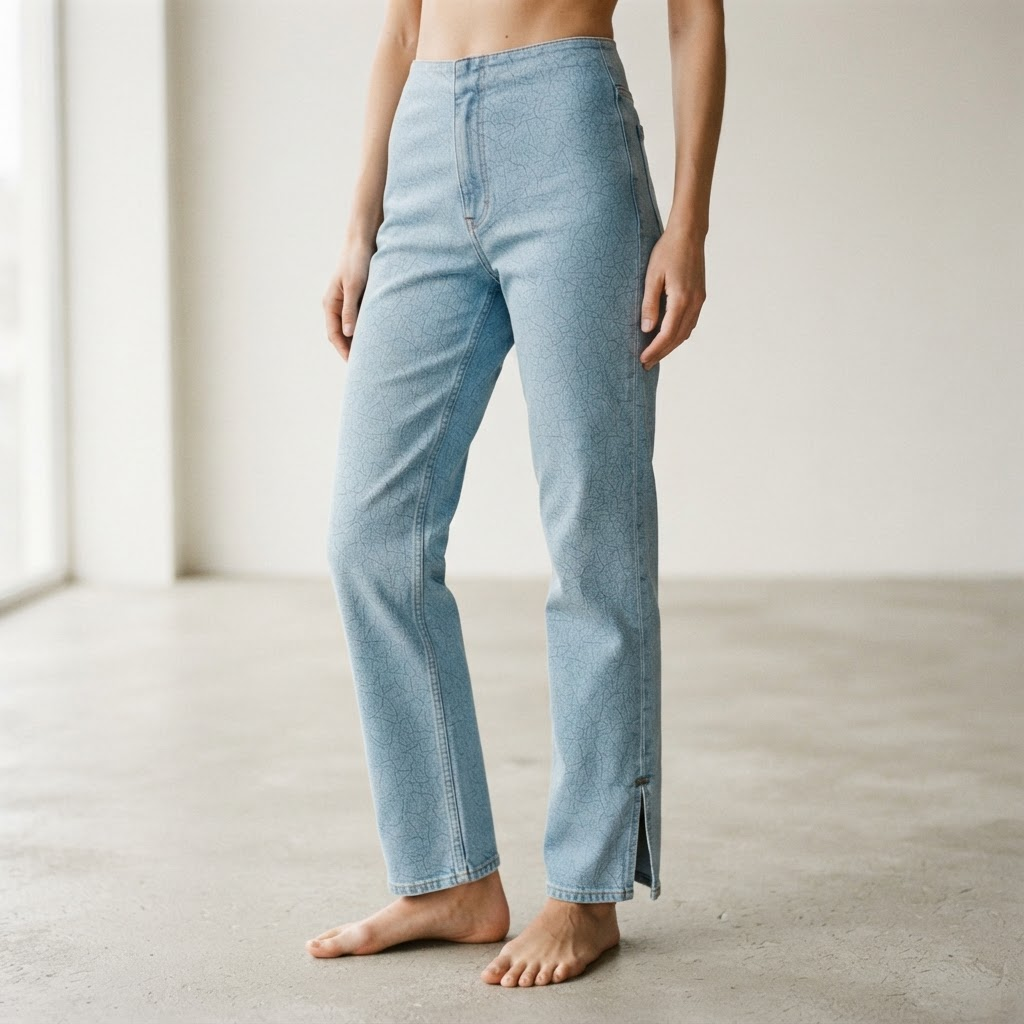
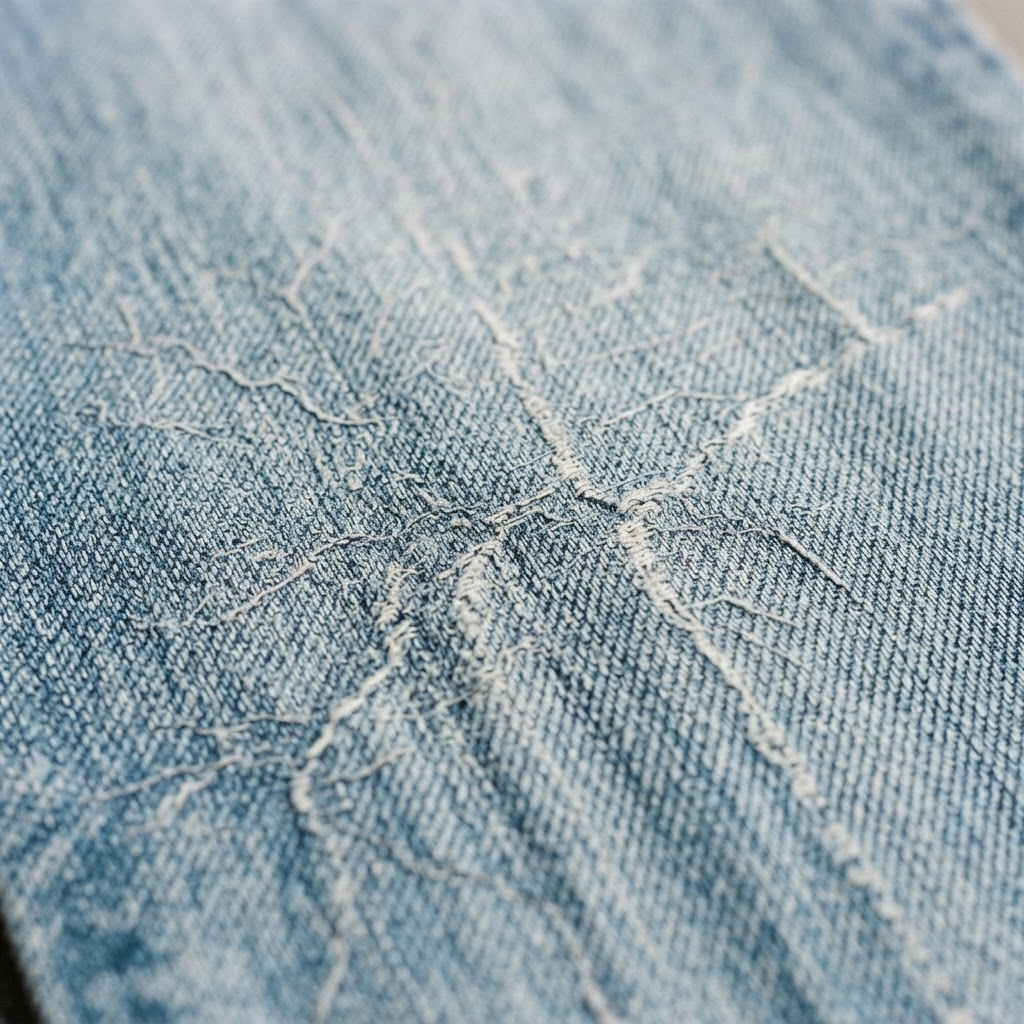
Application 1|Subtle Crackle Patterns & Side Slits:Low-contrast crackle lines add detail to light blue denim. Combine them with straight legs, subtle flares, or side-slit hems, checking tonal limits and fabric strength before production.

Illustrative image of a model wearing light blue crackle-pattern jeans with side-slit hems.

Styling example: light blue crackle patterns and side-slit hems.

Illustrative close-up of pale irregular crackle lines and twill texture on light blue denim.

Detail example: crackle lines and the denim weave.

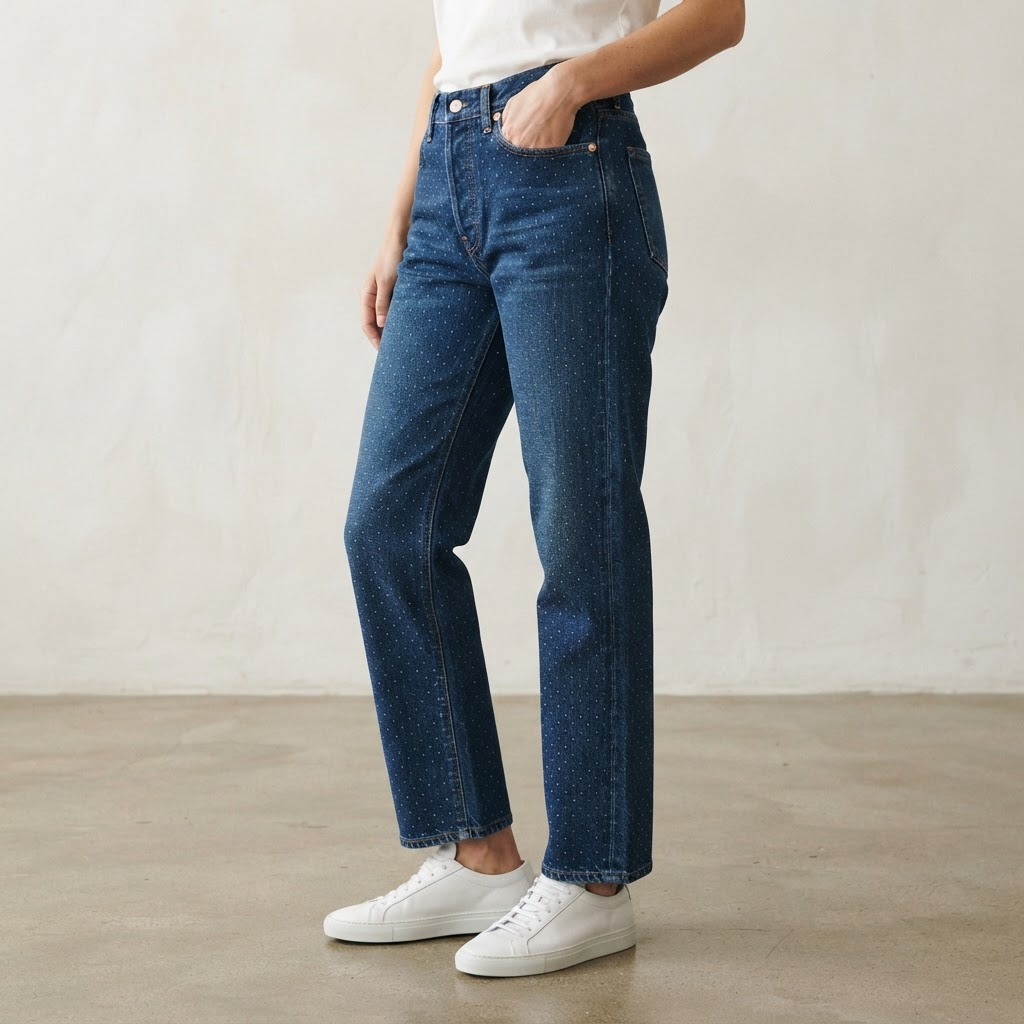
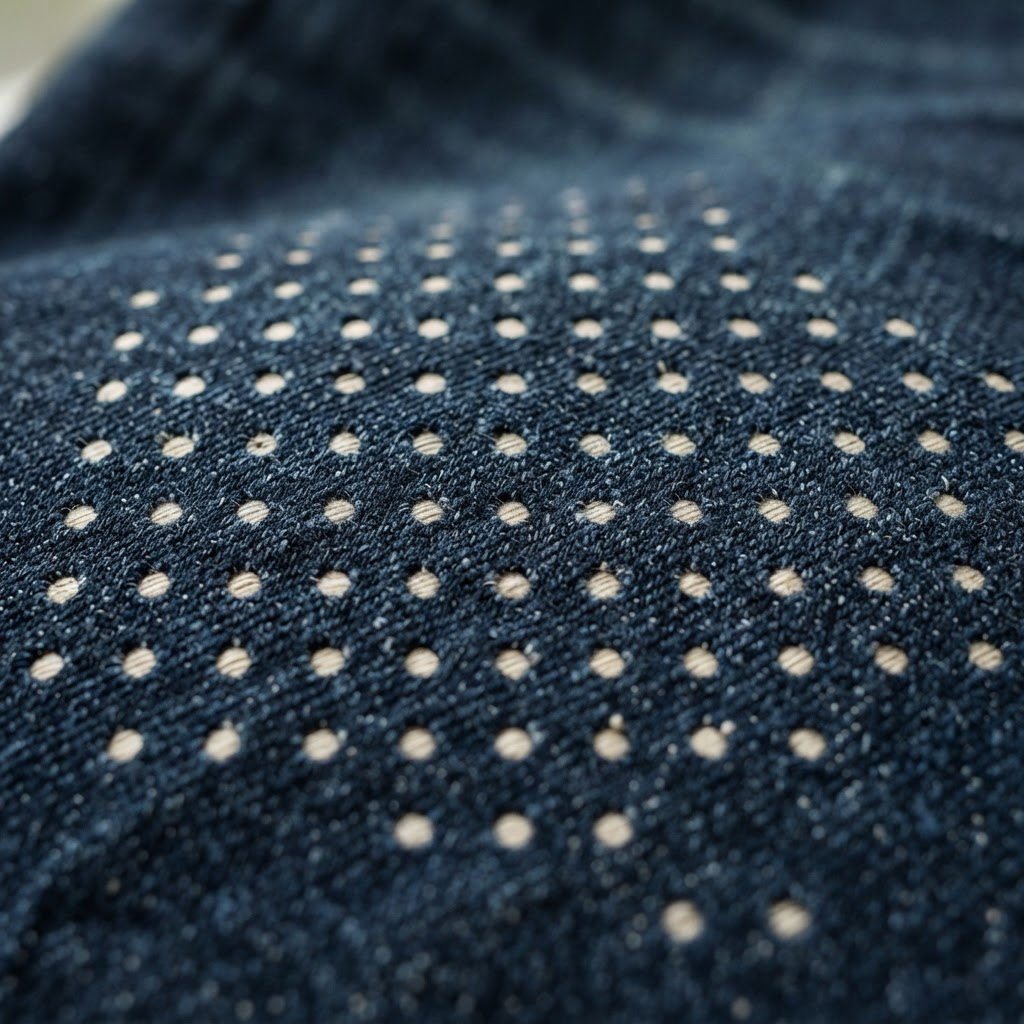
Application 2|All-Over Dots on Dark Straight-Leg Jeans:Small dots across dark denim create a subtle all-over pattern. Define dot size, spacing, density, and alignment across seams in the technical artwork and approved sample.

Illustrative image of a model wearing dark blue straight-leg jeans with small pale dots throughout.

Styling example: small dots distributed across dark straight-leg jeans.

Illustrative close-up of regularly spaced pale dots and woven texture on dark blue denim.

Detail example: dot size, spacing, and fabric texture.

Application 3|Diamond Patterns & Tonal Gradients:Diamond patterns can be combined with a dark-to-light gradient from waist to hem and extended across large patch pockets. Check motif size, alignment, size grading, and shade consistency across panels, pockets, and both legs.

Stone Wash: Irregular Vintage Wear

Stone washing uses mechanical abrasion to develop aged fading, seam contrast, and varied blue tones. Assess appearance variation, fiber abrasion, equipment requirements, and sludge management when selecting the washing medium and process.

Enzyme Wash: A Cleaner Surface & Softer Feel

Enzyme treatments modify surface fibers, fading, and hand feel for a cleaner, softer appearance. Set time, temperature, pH, and dosage for the enzyme and fabric, then verify weight, strength, and the final effect through wash trials.

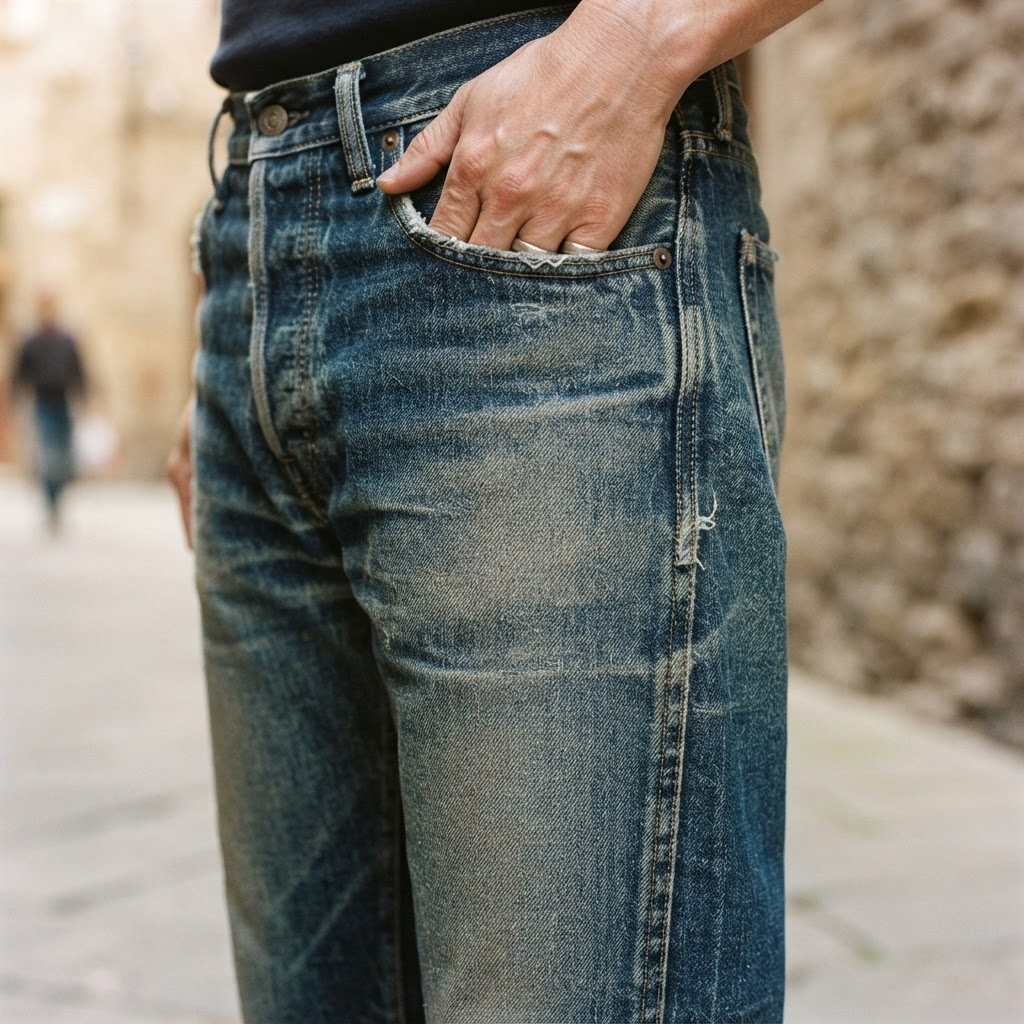
Illustrative close-up of a hand in a jeans pocket, showing hip fading and wear along the pocket edge.

Styling detail: vintage fading and blue tones around the pocket.

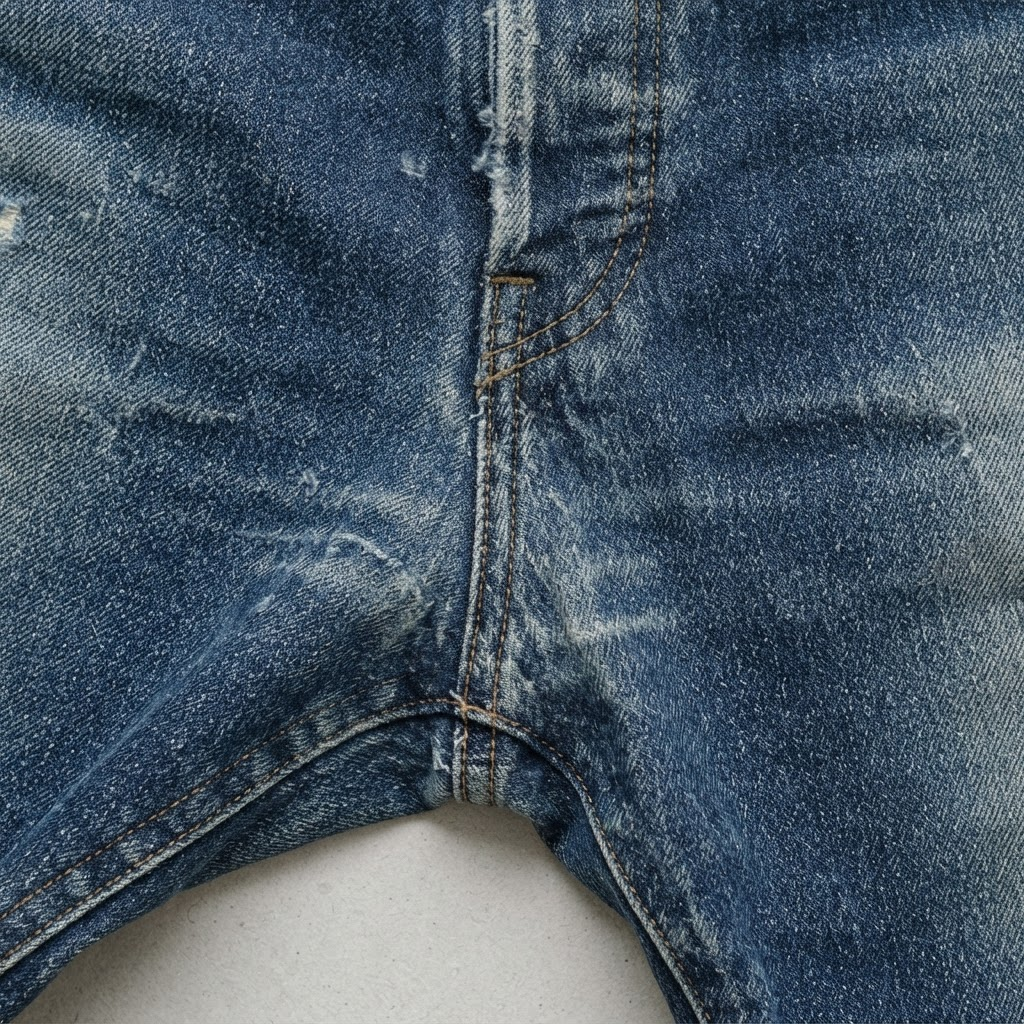
Illustrative close-up of denim front-rise seams, mottled fading, and localized wear.

Detail example: front-rise seams, localized wear, and shade variation.

Snow / Acid Wash: High-Contrast Mottling

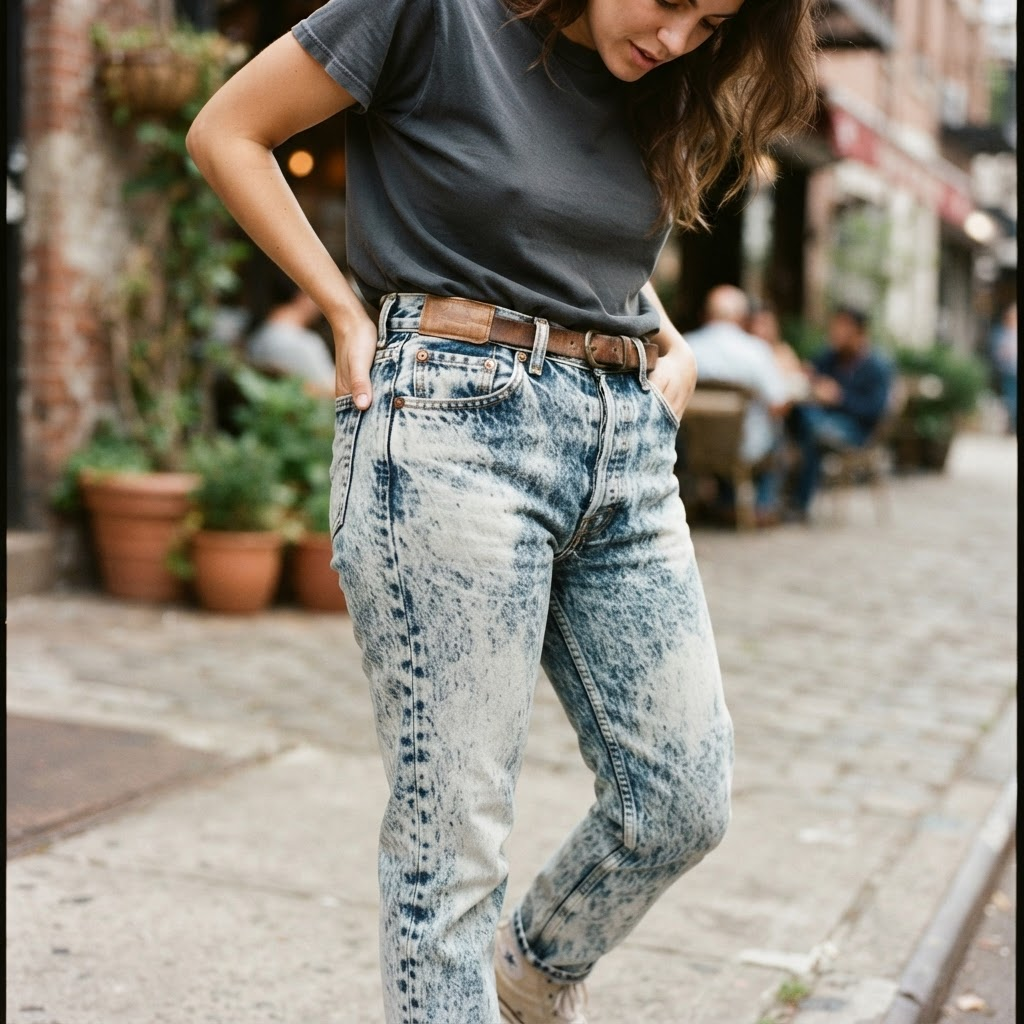
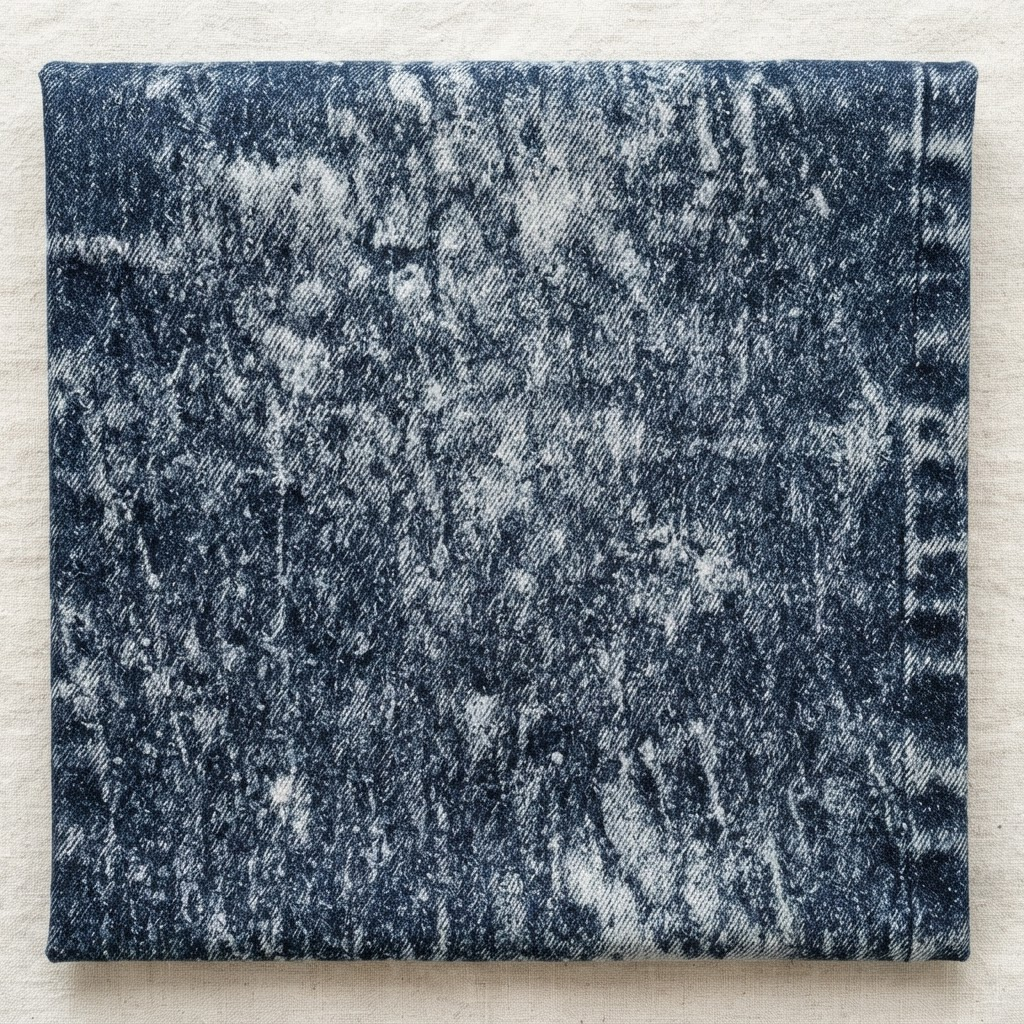
Irregular pale clouds and spots create a pronounced vintage appearance. Before production, define mottling density, pale-area limits, left-right variation, and the base shade. Confirm the processing formulation, protective measures, and wastewater treatment arrangements.

Illustrative image of a model wearing blue-and-white mottled jeans with a brown belt.

Styling example: high-contrast snow-wash mottling.

Illustrative image of a dark blue denim swatch with dense, irregular pale mottling.

Fabric example: the density and distribution of pale mottling against the base shade.

Special Water Wash: Muted Colors from an Undyed Base

Our process starts with garments made from undyed 100% cotton fabric, followed by dyeing and washing. Pantone® references or approved customer swatches guide the development of muted shades such as gray-purple, sage, dusty pink, and beige.

Color Approval Note

Use Pantone® as a development reference and confirm the final shade on the actual fabric. Before production, approve physical samples under standard lighting, color tolerances, and wash fastness, while recording fiber batches, pretreatment, dyeing, and drying conditions.

Controlling Distressing in Production

Assess knee openings, worn edges, and fraying through subsequent processing and home-laundering tests. Define placement, dimensional limits, retained yarns, and reinforcement before production. Adjust placement across sizes to maintain the intended body proportions.

Approved Samples Define the Production Standard

Confirm the fabric and fit, then develop wash trials, garment samples, measurement charts, and appearance standards. Compare the first production batch with the approved sample and record adjustments to maintain traceable, repeatable processes.

Share your preferred wash references, Pantone® colors, and physical samples. We can help assess base shades, localized effects, dye trials, and production requirements.

Related Articles

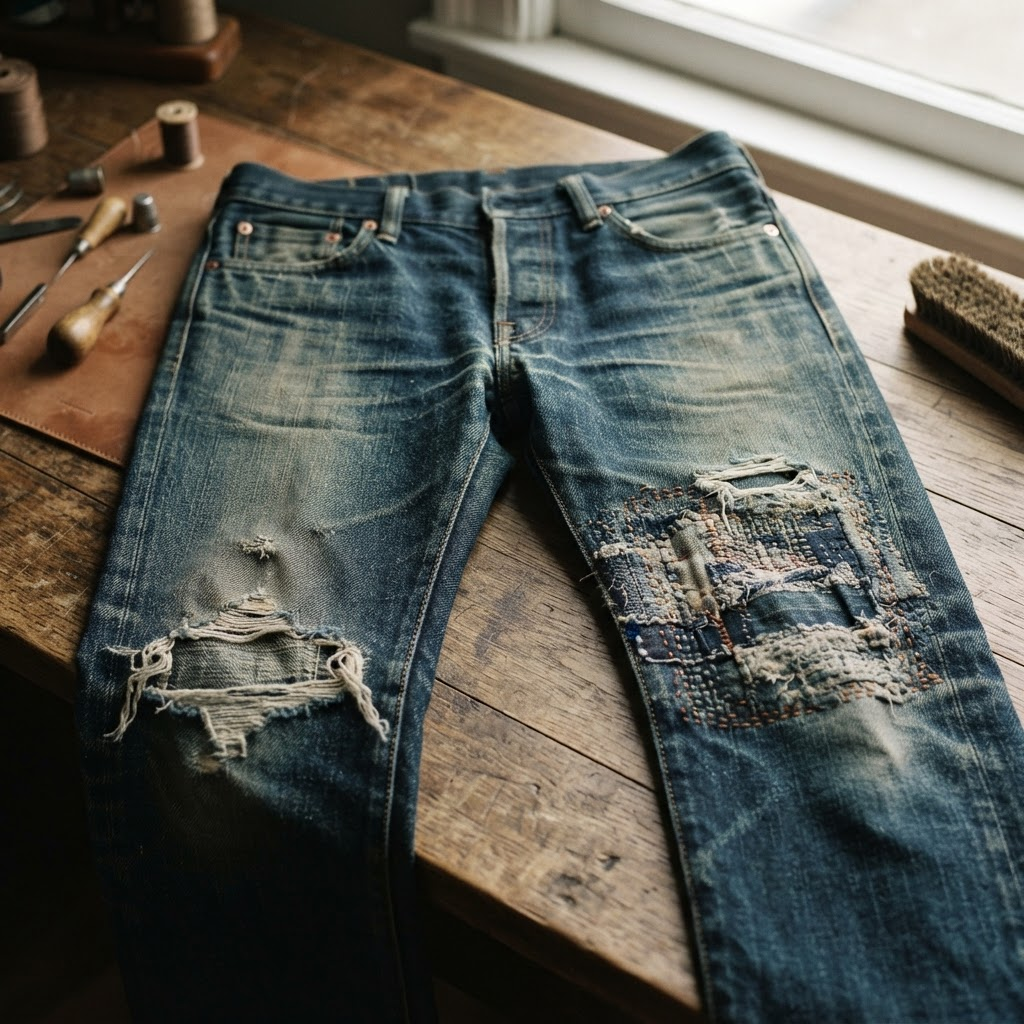
Illustrative image of jeans laid on a wooden table, showing thigh whiskering, distressed knees, and
作者: jchen • October 29, 2026
An illustrative guide to producing distressed jeans, covering damage specifications, seam bulk, size grading, and wash checks for apparel development.
Illustrative image of dark blue, light blue, and gray jeans folded in groups on a wooden table, show
作者: jchen • October 27, 2026
Explore five directions for 2027 denim sourcing, from wide and barrel fits to utility details, subtle flares, and inclusive sizing, with assortment planning insights.
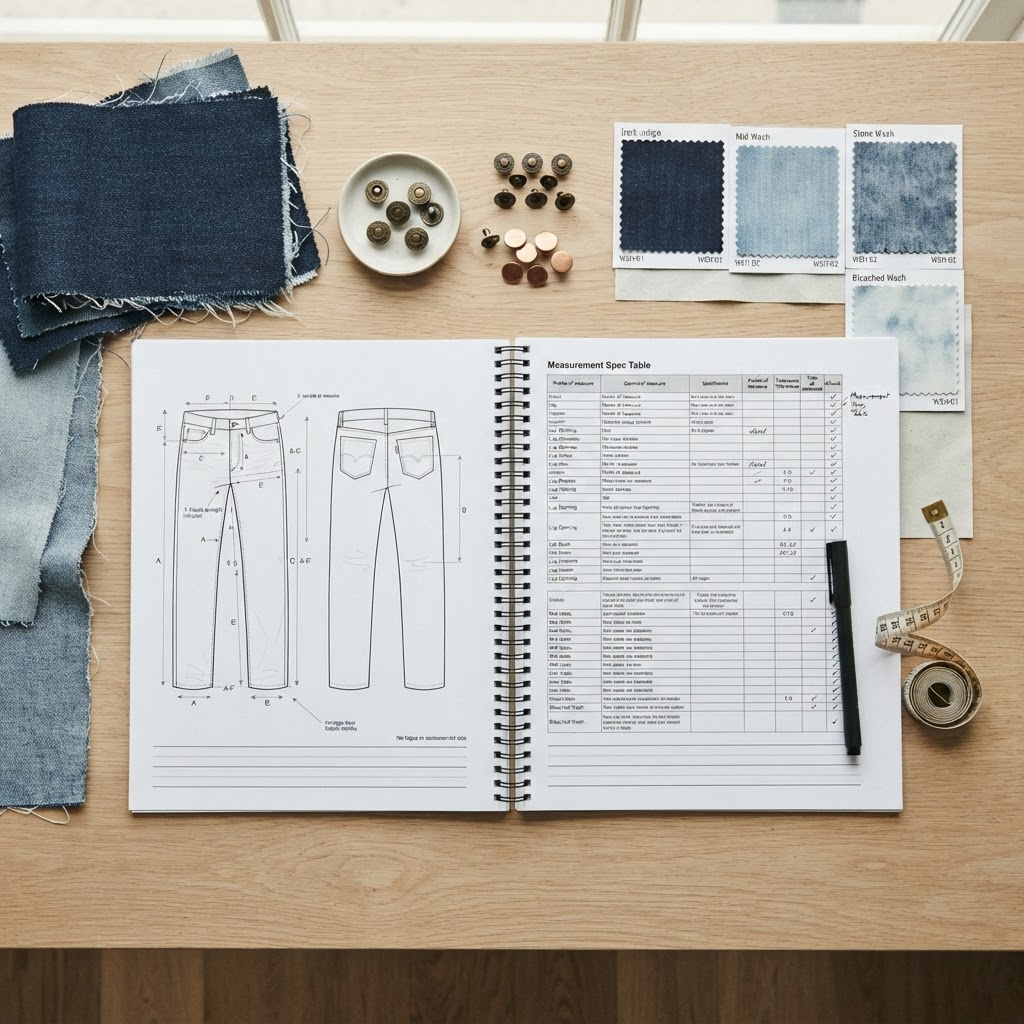
Illustrative image of denim development documents on a wooden table, showing front and back technica
作者: jchen • October 25, 2026
Starting a denim brand? Explore OEM and ODM options and the nine steps from inquiry and sampling to production, quality inspection, and delivery.
Illustrative image of light blue fabric draped on a pale surface beside a green leaf and beige fiber
作者: jchen • October 23, 2026
Explore lyocell denim development, from softness and drape to fiber testing, blend selection, wash performance, and traceability for responsible sourcing.
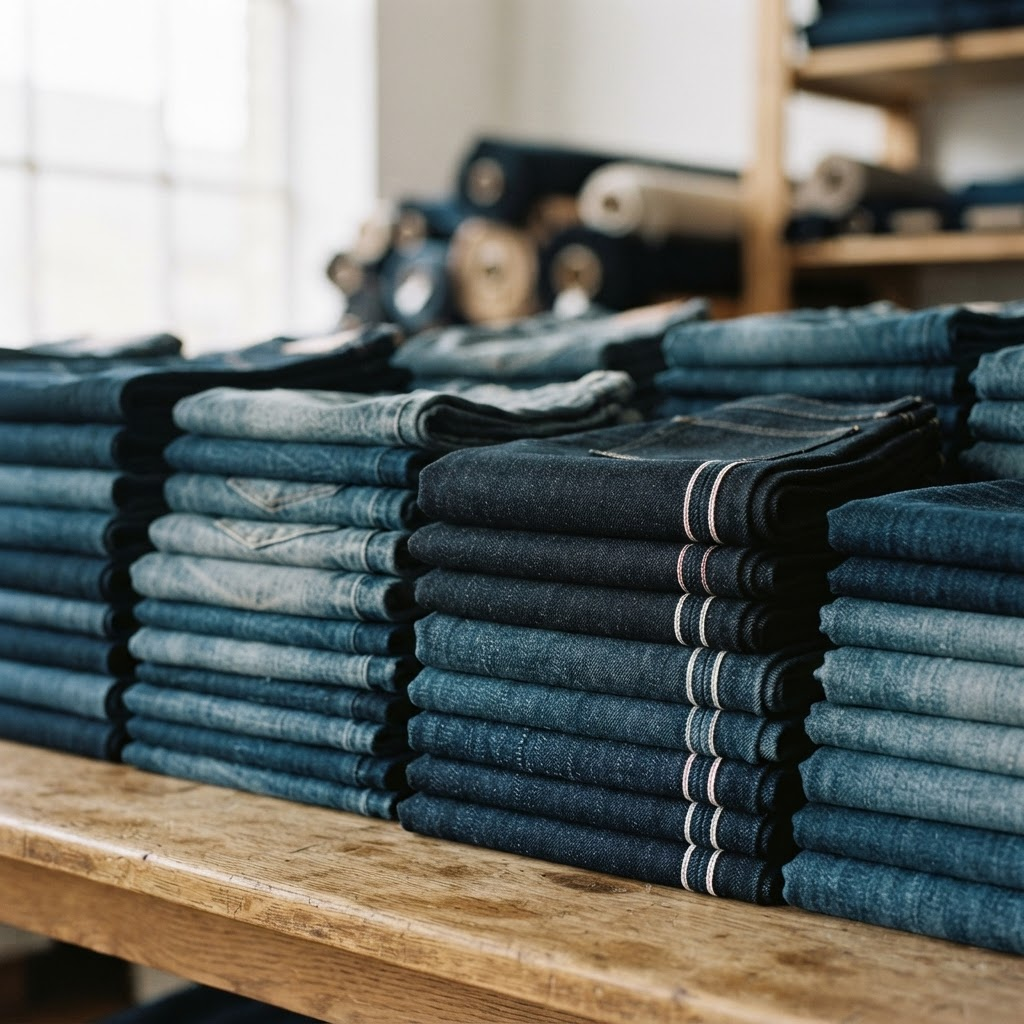
Illustrative image of stacked jeans in different blue washes, showing folded fabric edges and denim
作者: jchen • October 19, 2026
Compare denim weights from 8–10 oz to 14 oz and above. Explore fabric composition, stretch, construction, and washed samples to select denim for your brand.